Aqualane Shores Seawall Inspection Before Closing
September 3, 2026
September 3, 2026
A buyer under contract in Aqualane Shores right now is having a conversation their inspector didn't warn them about a decade ago. It usually starts the same way: someone assumes the flood policy they carry protects the dock and the seawall along with the house. It doesn't, and the gap between what people assume and what the policy actually says is where waterfront deals get interesting in this particular neighborhood.
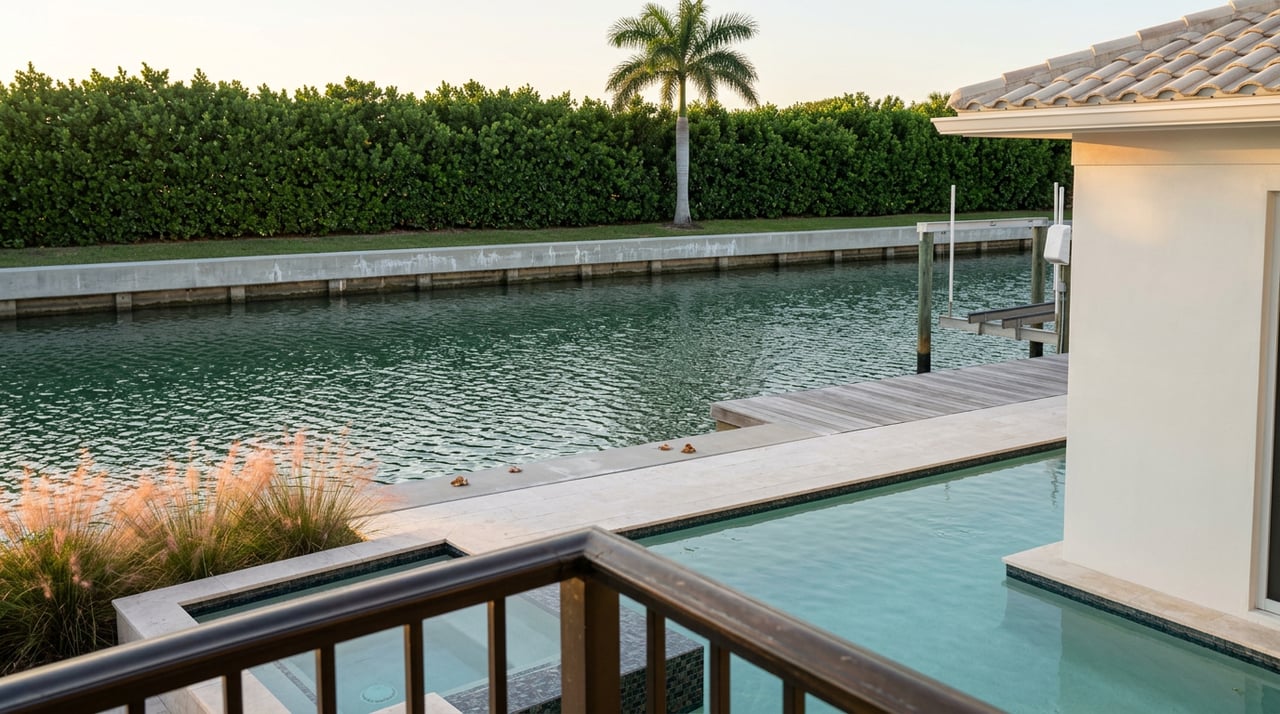
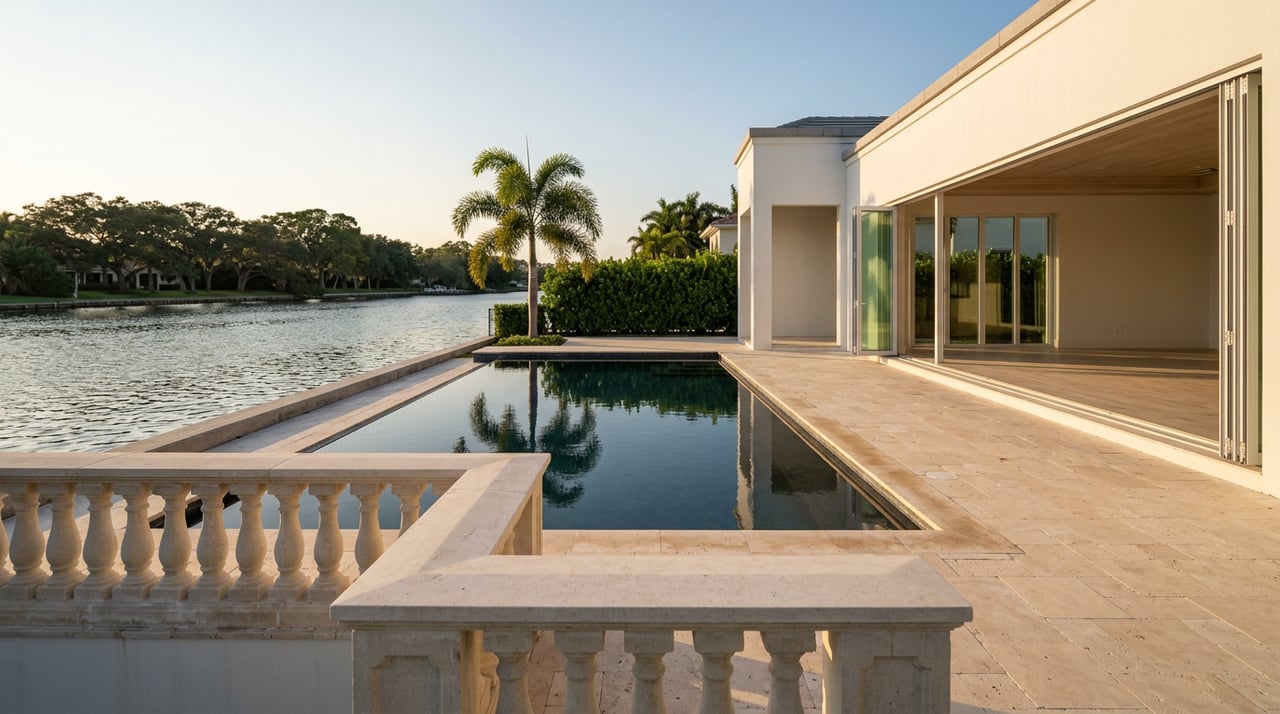
That assumption isn't unreasonable. Most buyers have owned inland homes where flood insurance was a line item, not a governing document for how the property functions. Aqualane Shores is different. The whole premise of the address, the reason a lot here costs what it costs, is that a boat can leave a private dock and reach Naples Bay and Gordon Pass in well under fifteen minutes, with canal depths commonly running eight to ten feet at mean low water. The wall and the dock aren't amenities sitting next to the house. They're the mechanism that makes the address worth the number on the listing.
A standard National Flood Insurance Program policy insures the structure of the home and, depending on the form, certain contents. It was built to protect a building against rising water. Seawalls, bulkheads, docks, and similar exterior marine structures sit outside that scope by design. The Florida Department of Financial Services lists this plainly among the standard NFIP exclusions: fences, piers, seawalls, bulkheads, wharves, and docks on or over water are not covered property under a standard flood policy.
That's not a Naples quirk or fine print someone buried on purpose. It's the same language nationwide. What changes from neighborhood to neighborhood is how much the excluded structure is doing. In a canal-front Aqualane Shores lot, the wall and the dock are doing more work than almost anywhere else in the city, which means the exclusion lands harder here than it would on a home two blocks inland. The City of Naples also caps standard NFIP building coverage at $250,000, a figure that undersells most homes in this neighborhood before you even get to the marine structures the policy won't touch at all.
None of this shows up on a listing sheet. It shows up after a storm, when an adjuster explains in plain language what the policy was never written to pay for.
Here's the detail that catches even attentive buyers off guard. The City of Naples created the West Naples Bay Special Taxing District specifically to fund canal maintenance, including dredging and seawall inspection, for the canals inside Aqualane Shores. According to the city's own ordinance language, that district covers the canal-front parcels between roughly 14th Avenue South and Galleon Drive, but it does not include properties that face Naples Bay directly.
Two homes on the same street can carry completely different maintenance and assessment profiles depending on which side of that line the lot falls on. A canal-front parcel may be subject to a future dredging assessment tied to the district. A bay-facing parcel a few doors down is not part of that district at all, which means its maintenance obligations and cost exposure run on a separate track entirely. This is exactly the kind of distinction that never appears in a marketing photo and rarely comes up until someone is deep enough into a transaction to start asking pointed questions.
Before writing an offer on a canal-front lot here, it's worth confirming three things directly with the city:
The city's finance department maintains records on special assessment areas generally, and it's a five-minute call that can save a much longer conversation later.
A seawall doesn't fail from the top down in a way you can see from the yard. Most of the damage that eventually becomes a six-figure repair starts behind the wall, invisible until it isn't. A proper pre-closing inspection should specifically ask for:
A wall under thirty years old and otherwise sound is typically a repair candidate rather than a full replacement, and repair can buy meaningful additional years at a fraction of replacement cost. But that judgment call depends entirely on what an inspector finds behind the visible surface, not on how the wall looks from the pool deck.
Marine permitting in the City of Naples covers more ground than most buyers coming from inland markets expect. Docks, boat lifts, pilings, seawalls, riprap, and dredging all require a city permit, and some scopes of work need Florida Department of Environmental Protection or federal sign-off before the city will approve anything at all. Dredging on a natural water body specifically requires council approval through a petition process before a marine permit application can even move forward.
The fees themselves are modest. That's not where the real exposure sits. The exposure lives in the repair or replacement bill that follows once a wall starts failing, and Aqualane Shores has enough age on its waterfront infrastructure that this isn't a hypothetical for every buyer who walks through a listing here.
The Naples Pier rebuild, immediately adjacent to Aqualane Shores, is active construction right now, with the city's completion target extended to November 15, 2026 following a Florida DEP final order in November 2024, a supplemental biological assessment in April 2025, and FEMA's May 2025 confirmation that the project qualifies for in-kind replacement. That timeline has put marine permitting, insurance renewals, and seawall condition squarely on the neighborhood's agenda this year, whether a given buyer planned to think about any of it or not.
None of this changes what makes Aqualane Shores worth the premium. The deep water, the no-bridge access to the Gulf, and the short walk to Third Street South's restaurant row, including The Continental, Campiello, and Osteria Tulia, are still the draw and still hold up under scrutiny. It just means the diligence has to match the value sitting behind the wall.
Does my homeowner's insurance cover the seawall if my flood policy doesn't? Check your policy terms and ask your insurer about seawall coverage when comparing quotes.
How do I confirm whether my lot is canal-front or bay-facing for taxing district purposes? The City of Naples finance and streets and stormwater departments can confirm which special taxing district, if any, applies to a specific parcel. This is worth doing before closing, not after.
Does the Aqualane Shores neighborhood association repair seawalls? The association coordinates community matters and communicates neighborhood updates. Check the deed and any applicable documents specific to the parcel to determine who handles seawall and dock repair.
If a storm damages my seawall, what should I do before filing anything? Document the wall's condition before the storm if possible, and afterward, order an independent inspection before assuming your flood carrier will address the damage. Since marine structures typically fall outside NFIP coverage, understanding what your specific policy does and doesn't include is worth doing well before hurricane season, not during it.
Waterfront diligence in Aqualane Shores isn't more complicated than diligence anywhere else in Naples. It's just concentrated on a few specific questions that most out-of-market buyers don't think to ask until someone points them out. If you're weighing a purchase or a sale on a canal-front lot here and want a second set of eyes on what a specific parcel's history actually shows, Cheena Chandra can walk through it with you. Let's Connect.
This article is general information, not legal, tax or financial advice. Consult a qualified professional about your situation.

Cheena is focused on integrity, her customers' needs, and using technology and social media in innovative ways. She goes to great lengths for her customers and is committed to making the home buying and selling experience a seamless one. As a result, her customers have been amazing referrals for new business.