What a $17 Million Sale in Coquina Sands Actually Priced
September 24, 2026
September 24, 2026
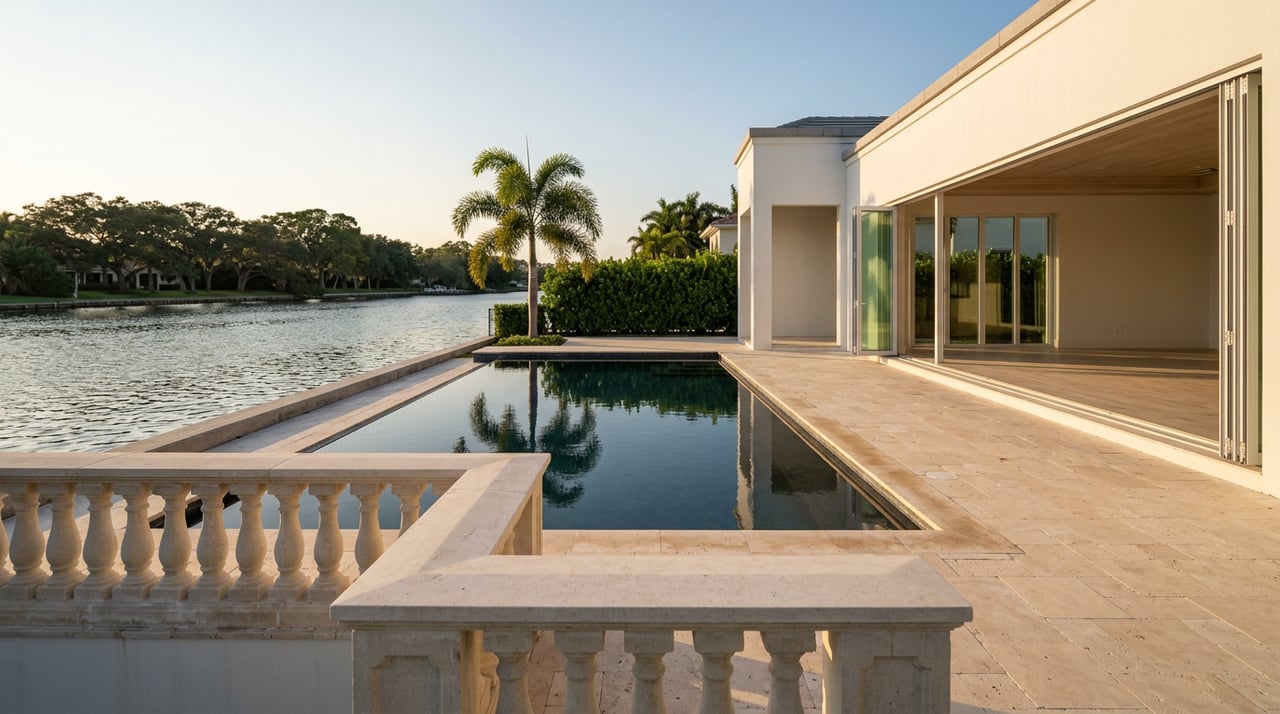
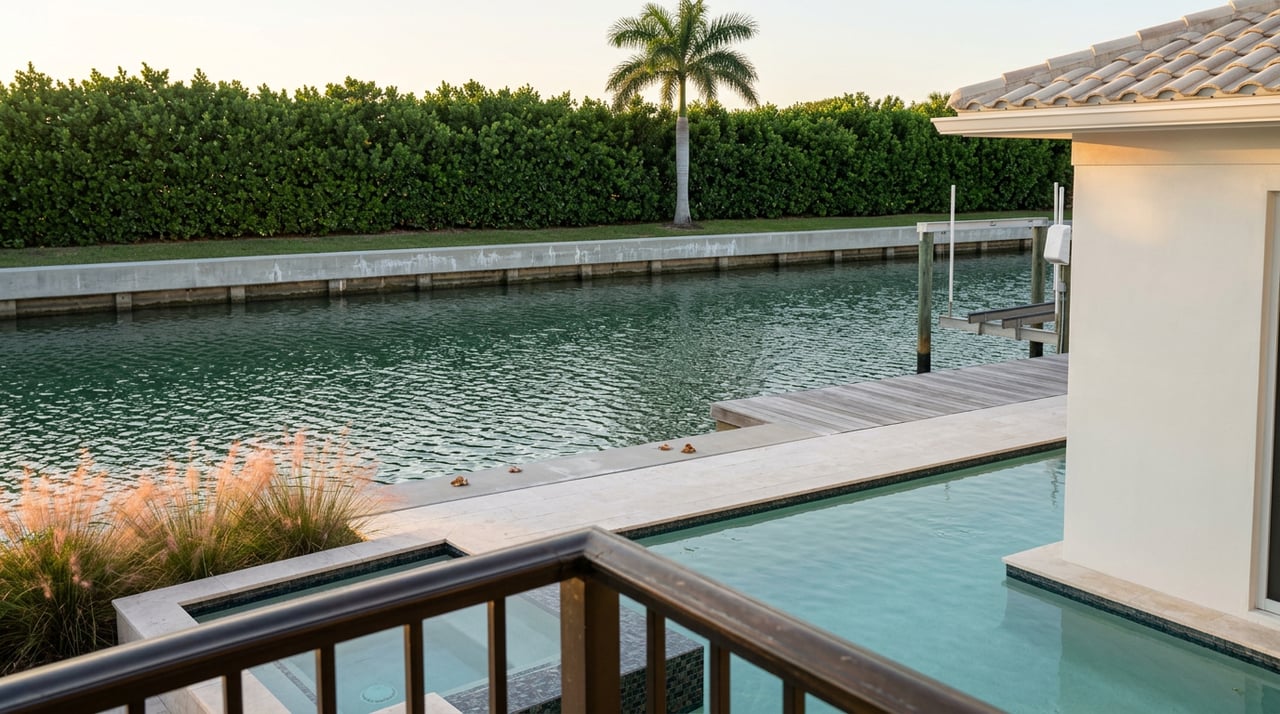
"Sales like this highlight the continued appeal of Coquina Sands, particularly for new construction near the Naples Beach Club," said James Bates and Maggie Ives, the Premier Sotheby's International Realty advisors who represented both sides of the deal. They were talking about 584 Banyan Blvd., a newly built waterfront estate that closed on April 13, 2026, for $17.06 million, a record for the neighborhood that beat the previous high of $13.35 million on Yucca Road by more than $3.7 million.
Read that quote again and you'll notice what it doesn't say. It doesn't say the buyer paid $17 million for a house. It says they paid it for new construction near a specific piece of real estate momentum. That distinction is the whole story in Coquina Sands right now, and it changes how a buyer should read every listing in the neighborhood.
The property at 584 Banyan Blvd. is genuinely impressive on paper: 6,909 square feet, six bedrooms, eight bathrooms, a custom marble wine bar, built by Parker Hudson Homes with architecture by Beck Architectural Group and interiors by Freestyle Interiors. But none of that explains why it broke a record set less than two years earlier by more than $3.7 million. What explains it is location: the home sits across from the Naples Beach Club golf course, the centerpiece of the $1 billion-plus Four Seasons redevelopment that opened its doors to guests in November 2025 and has been rolling out amenities in phases ever since.
The sale is a useful marker because it shows something a median price can't: in Coquina Sands, new construction near the resort's edge is being priced almost independently of the structure sitting on it. What the buyer paid for was proximity and permission to build exactly what they wanted, not a finished product competing against comparable homes on their own merits.
That's not unusual for Naples. It is unusual for how consistently it happens here, because Coquina Sands has spent seventy years running two almost unrelated real estate markets under one zip code, and most buyers only ever hear about one of them.
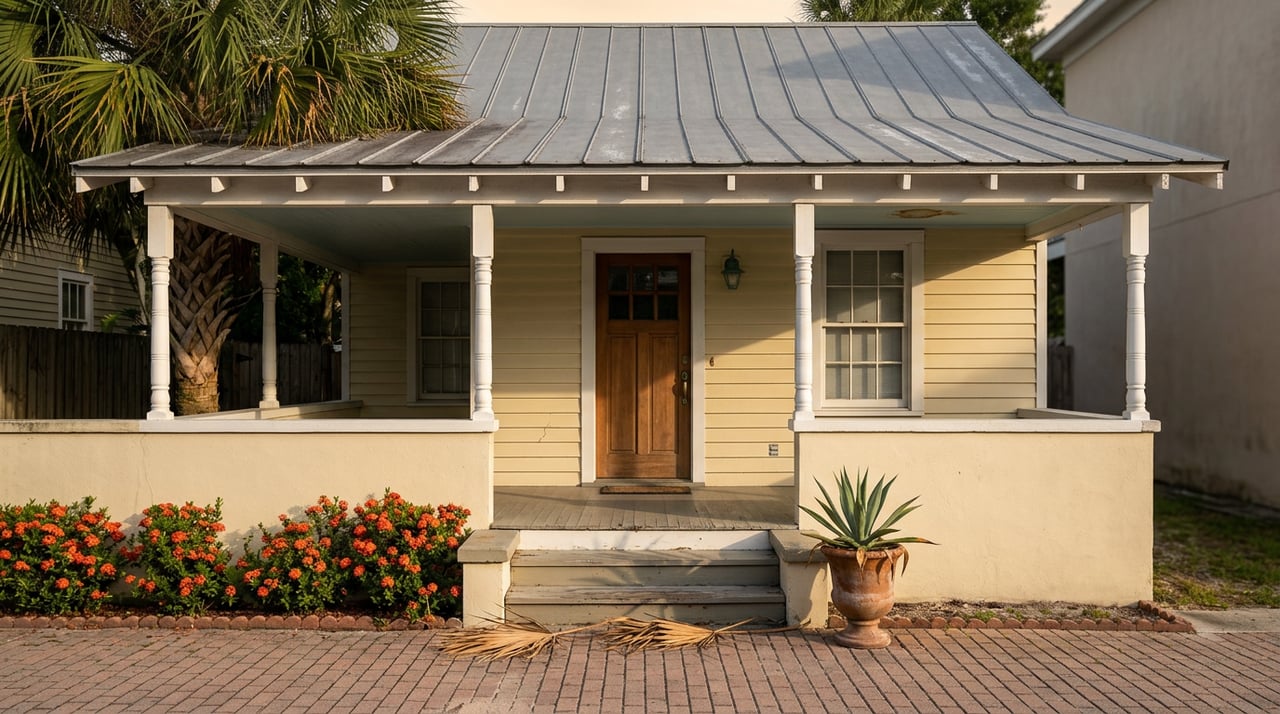
Coquina Sands started as a collection of small one-story cottages in the 1950s, many under 1,400 square feet. Building activity stayed heavy through the 1970s, tapered through the 1980s, then picked back up around 2000 with a wave of teardown-and-rebuild activity that ran until the 2008 financial crisis stalled it. Construction came back to life again from roughly 2014 to 2017, then slowed once more starting in 2018.
That pattern matters because it means the neighborhood's single-family stock has never really stabilized around one era of construction. Original homes that started at 1,400 square feet now sit on the same streets as new builds approaching 10,000 square feet, and current listings back that up: as of listings tracked through mid-2026, the average price per square foot in Coquina Sands has run somewhere between roughly $1,680 and $1,980 depending on the month and the mix of homes on the market at the time, with active listings ranging from a $360,000 fixer to properties asking $50 million.
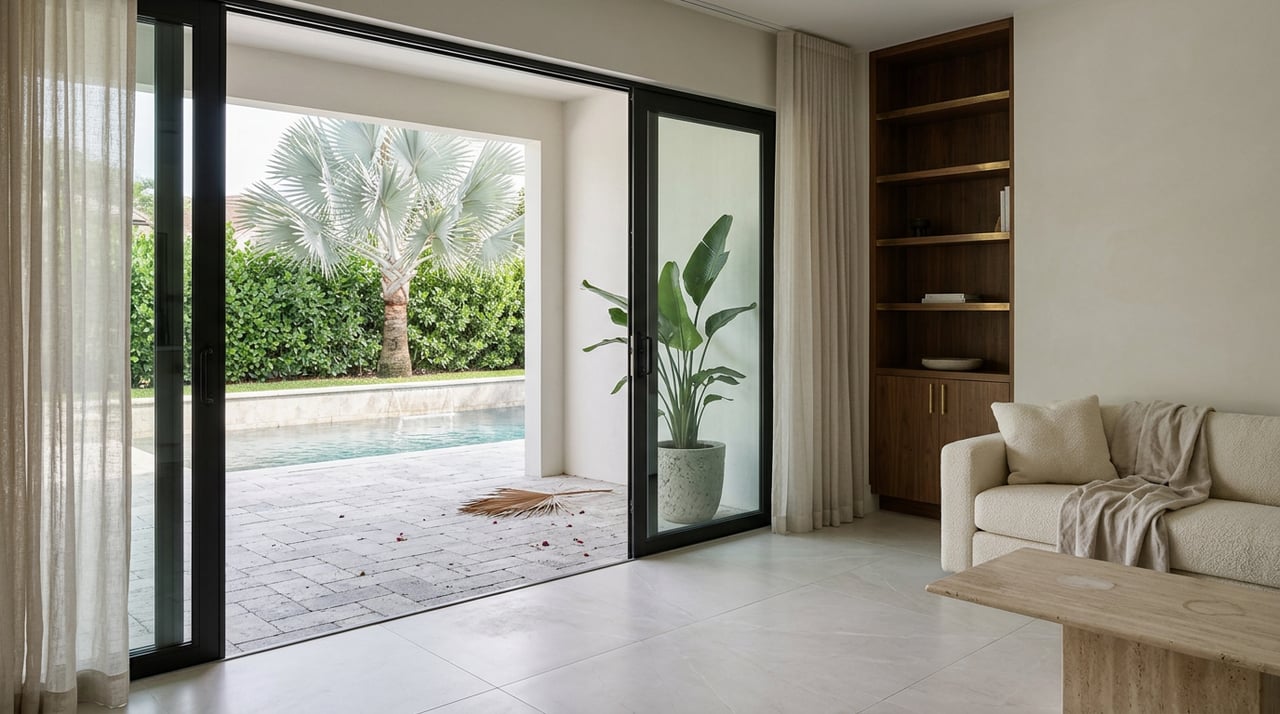
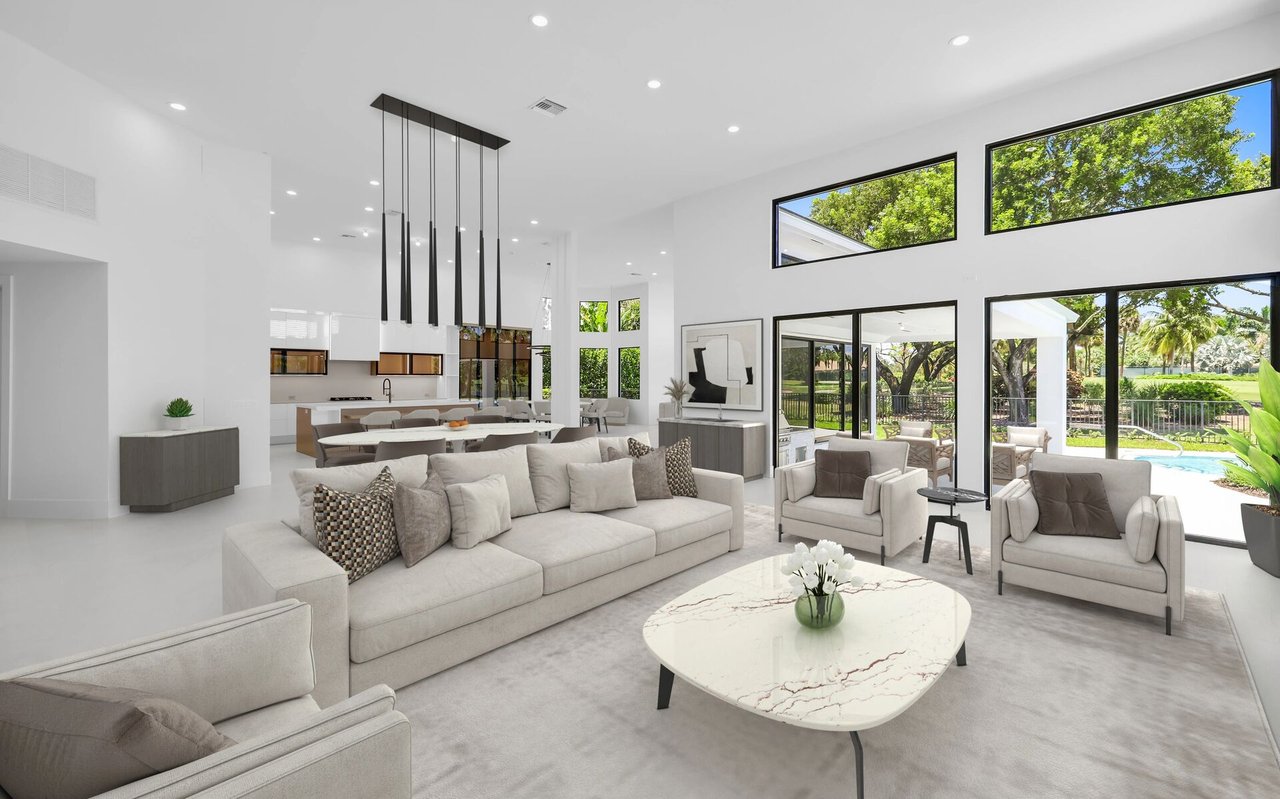
That's an enormous spread for one neighborhood, and it's not really describing one market. When a 1965 cottage on a half-acre lot sells, the buyer is mostly pricing the dirt, the lot elevation, and the potential of a teardown. Recent new-construction listings routinely advertise finished floor elevations of 14 feet as a selling point, which tells you the buyers evaluating these lots are thinking about resilience and rebuild potential as much as they're thinking about square footage. When a newly finished 5,000-square-foot estate sells, the buyer is pricing a finished product built to current codes and current tastes, often furnished, often designed around indoor-outdoor living with folding glass walls and a summer kitchen. Averaging those two transactions into one price-per-square-foot figure tells you almost nothing useful about what either buyer actually got.
Three blocks toward the water, a completely different set of rules applies.
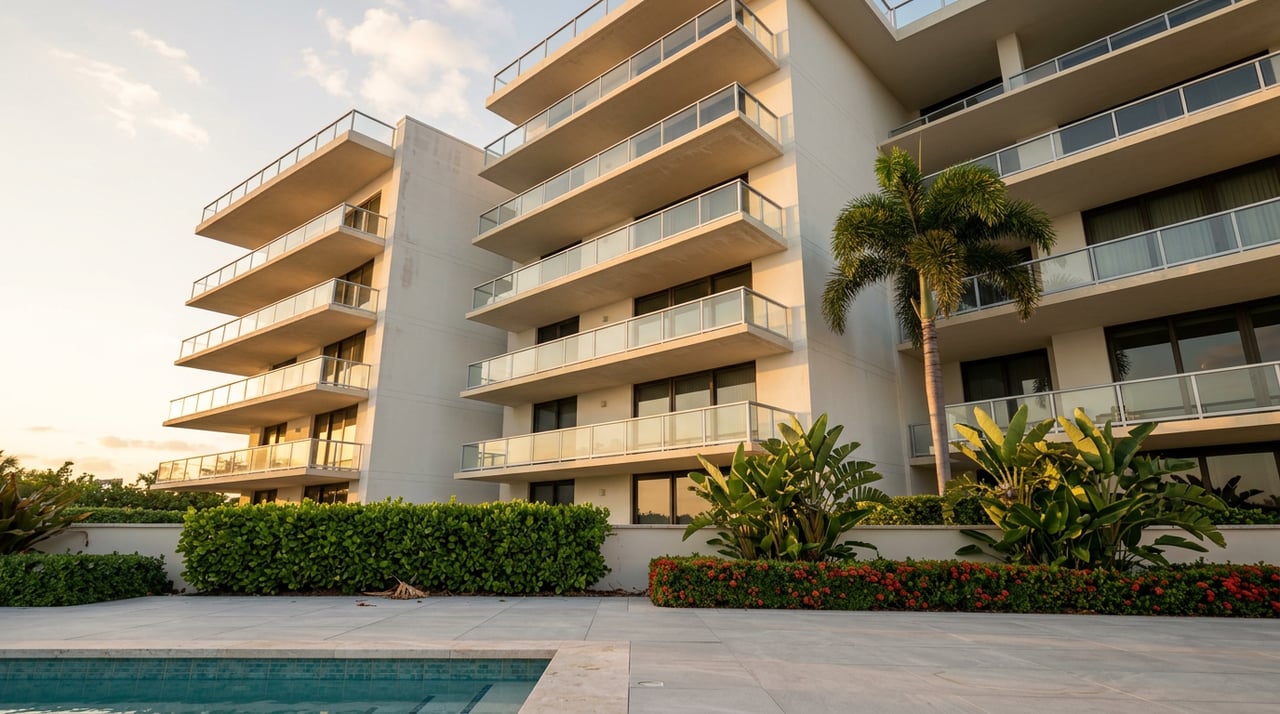
Coquina Sands was the first stretch of Naples beachfront to get condominiums, starting with the Bahama Club in 1956. Nine more beachfront cooperative and condominium buildings followed over the next three decades, ending with Via Delfino in 1989. Four of those original buildings, Via Delfino, Embassy Club, Laurentians, and Whitehall, still anchor the beachfront today. And here is the part that separates this segment from everything happening a few streets inland: developers have tried repeatedly to acquire these buildings for teardown and redevelopment, and they have not succeeded.
That failure is structural, not incidental. Beachfront co-op and condo boards in low-rise buildings like these typically require supermajority owner consent to sell the entire property to a developer, and getting dozens of individual owners, many of whom bought specifically for the low-density, quiet-street character these buildings offer, to agree on a sale and a price is difficult in the best of markets. The practical result is that this stretch of beachfront has not added a new building since 1989, and there's no indication that's about to change.
That makes the beachfront condo stock in Coquina Sands function almost like a fixed asset class rather than an ordinary segment of the housing market. It cannot expand the way the inland lot market can. A buyer choosing between a canal-front cottage that's a strong teardown candidate and a unit in one of these four buildings isn't really choosing between two homes at a similar price point. They're choosing between a market that will keep replacing itself indefinitely and one that, by most evidence available, will not add another unit of supply in their lifetime.
The reopened Naples Beach Club, A Four Seasons Resort, is still filling in its own phases: the Tom Fazio-designed golf course is scheduled to open later in 2026, along with additional dining and entertainment venues, and the property's 153 private residences are being built out over time. That kind of staged, multi-year rollout tends to pull land value toward it well before every amenity is finished, and the record sale on Banyan Blvd. is a clean example of that happening in real time.
But that pull only really applies to the land-and-rebuild side of the neighborhood. A new construction lot near the resort's edge can capture the value of proximity because a builder can design the home specifically to take advantage of the golf course view or the walk to Market Square. A 1970s-era condo in one of the four legacy beachfront buildings benefits from the same location, but its ceiling is set by what the existing structure allows, not by what a buyer might imagine building there. The resort raises the floor for everyone nearby. It only raises the ceiling for the segment that can still be rebuilt.
If you're comparing Coquina Sands against other North Naples beach neighborhoods, the practical takeaway is to stop treating the published median or average price per square foot as a single number that describes the whole community. Ask instead which side of the line a specific property sits on.
For a house on a standalone lot, ask how old the structure is, whether recent comparable sales nearby were renovations or full teardowns, and what the lot's elevation certificate shows, since that 14-foot benchmark shows up often enough in new listings to suggest it's becoming a baseline expectation rather than an exception. For a beachfront condo, ask the association directly about any past redevelopment or bulk-sale discussions, since the track record here suggests those conversations tend to start and not finish.
Neither answer makes one segment better than the other. They're simply different bets. One is a bet that the neighborhood keeps regenerating its housing stock in step with Naples' broader building cycles. The other is a bet on scarcity that has already held for close to four decades.
Is more land likely to become available for teardown in Coquina Sands? The neighborhood's history suggests building activity moves in cycles tied to the broader Naples market rather than running out. Activity has picked up and slowed multiple times since the 1950s, and the mix of original cottages still standing next to new construction suggests more lots will change hands and get rebuilt over time, though timing tracks the wider market rather than any fixed schedule.
Could Via Delfino, Embassy Club, Laurentians, or Whitehall eventually get redeveloped? Nothing in the available record points that direction. Developers have pursued this repeatedly without success, and the ownership structure of these buildings makes a bulk sale difficult by design. Buyers should treat the current inventory in these buildings as close to fixed for planning purposes.
Does a rising average price per square foot in Coquina Sands mean home values are rising evenly across the neighborhood? Not necessarily. Because the figure blends teardown-candidate lots with finished new construction and legacy beachfront condos, a shift in the mix of what's selling in a given month can move the average without any single property type actually appreciating. Looking at comparable sales within the same property type gives a far more reliable read.
Coquina Sands rewards buyers who understand which market they're actually shopping in before they fall in love with a listing. If you're weighing a rebuild opportunity against a legacy beachfront unit, or trying to figure out what a specific address is really pricing, Cheena Chandra can walk you through the comparables that matter for your situation. Let's Connect.

Relocation
Moving to Naples doesn’t mean you stop missing things about Chicago. We still do.
Cheena is focused on integrity, her customers' needs, and using technology and social media in innovative ways. She goes to great lengths for her customers and is committed to making the home buying and selling experience a seamless one. As a result, her customers have been amazing referrals for new business.